

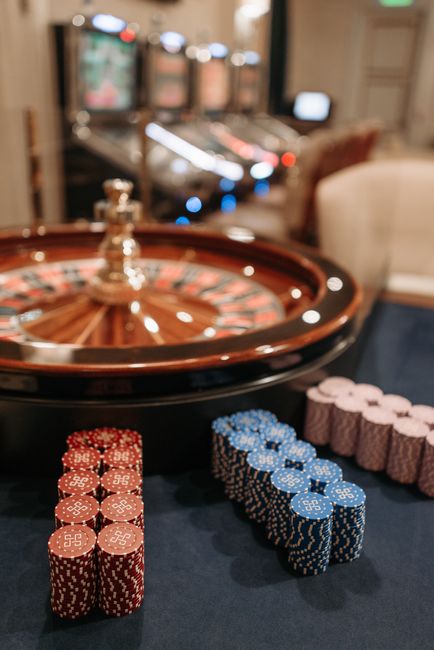
Every gambler has heard it a thousand times: the house always wins. It's the smug punchline delivered by people who've never split a pair of eights or sweated a two-outer on the river. And yet, the phrase survives because it contains a kernel of uncomfortable truth wrapped in a layer of lazy oversimplification. The house doesn't always win. It just wins more often than you do over a long enough timeline — and understanding exactly why is the single most useful thing any iGaming player can do.
Let's pull that idea apart properly, because the gap between "the house has an edge" and "you can't win" is where all the interesting stuff lives.
Casino games are priced, just like anything else you buy. The price is called the house edge, and it's expressed as a percentage of every dollar wagered that the casino expects to keep over the long run. Here's how some of the most popular options actually stack up:
See the spread? A blackjack player grinding basic strategy is paying a very different tax than someone feeding a keno ticket. The house edge isn't some cosmic law — it's a dial the game designer set, and you get to choose which dial you're playing against.
Here's where most people's intuition fails them. The house edge describes an average over millions of hands, spins, or pulls. Your session is a tiny, noisy sample. That noise is variance, and it's the reason a slots player can turn $50 into $500 on a Tuesday night while a blackjack grinder playing a mathematically superior game empties out over the same two hours.
Slots have enormous variance. Payouts are rare and large, with most spins returning nothing. Blackjack has comparatively low variance — you win or lose roughly one unit at a time, so your bankroll tends to drift rather than lurch. If you have a $200 bankroll and want to play for three hours, choosing a high-variance slot with a 96% RTP and huge max win potential is going to feel very different from grinding $10 blackjack hands at a 0.5% edge.
Neither is wrong. They're just different tools for different moods. The mistake is thinking variance is the same thing as edge. It isn't. Variance determines the shape of your results; the edge determines their direction. See king88 for a side-by-side comparison.
Modern video slots are the engine room of the iGaming industry, and they deserve a closer look. Return to player (RTP) figures are typically published in the paytable or game info screen, and a good online slot sits between 95% and 97%. That sounds generous compared to roulette. But here's the catch: slots play fast. A land-based slot might spin 600 times an hour. An online slot can easily hit 1,000+ spins in the same window if you're autoplaying.
Run the math. A $1 spin at 96% RTP costs you four cents per spin in expectation. At 900 spins per hour, that's $36/hour in theoretical loss — regardless of whether you're up or down at any given moment. Your bankroll bleeds quietly in the background of every bonus round you trigger.
None of this means slots are rigged or unfair. They're transparently priced. The house edge is the entertainment cost, the same way a movie ticket is a cost. The people who get into trouble are the ones who don't know the price going in.
Poker deserves its own paragraph (or ten) because it's the one major casino game where the house doesn't play against you. In cash games, the casino simply takes a rake — usually 5% of the pot up to a cap, or an hourly seat charge in some rooms. Your opponents are the other players.
That structural difference changes everything. A skilled poker player can genuinely achieve a positive expected value over time, because the money is moving between players, not from players to the house. The rake is a drag, but it's a manageable one if your edge over the table is bigger than the rake percentage.
Tournaments add another layer. Buy-ins are pooled, the house takes a cut (the "vig" or "juice"), and the rest is paid out. A $100+$10 tournament has roughly a 9% fee, which is a steep edge relative to a cash game — but tournament structures allow for life-changing scores that cash games rarely produce.
If you're serious about poker, study basic preflop ranges, bankroll management, and position. Most recreational players lose because they play too many hands from bad positions. Fixing that one leak puts you ahead of the majority of the field.
You can have perfect strategy and still go broke if you size your bets like an idiot. Bankroll management is the unglamorous discipline that separates players who last from players who torch their accounts in a weekend. A few rules of thumb that hold up:
Tracking is the step most people skip, and it's the one that teaches you the most. After a month, you'll know your actual win rate, your actual volatility, and whether your "system" is anything more than a story you tell yourself.
The house edge is a fact of arithmetic, but it isn't a verdict on your enjoyment or even on your results in any single session. Every spin, every hand, every river card is an independent event with a range of possible outcomes. The edge shapes the average. Variance shapes the story you'll actually tell.
So play the games you understand. Pick the ones with sane pricing. Size your bets to survive the swings. And when someone smirks and says the house always wins, feel free to smile back and point out that the house has never once hit a royal flush on the river for a six-figure pot. That's not how the house wins. That's how players do.

Dune Notes No rushing, no fuss — just thoughtful notes and practical help, written by people who care.

Dune Notes Real stories, useful guides and the occasional recommendation, all in one calm corner of the web.

Tide tables can seem confusing, but this simple guide explains how to plan a safe coastal walk and avoid being cut off by rising water.

Comments
ALina Kelian
19th May 2018 ReplyDune Notes Written for people who value the details, and want honest guidance they can trust. ullamco laboris nisi ut aliquip ex ea commodo consequat.
Rlex Kelian
19th May 2018 ReplyDune Notes We spend our time finding what works so you don't have to, and sharing exactly what made the difference. ullamco laboris nisi ut aliquip commodo.
Roboto Alex
21th May 2018 ReplyDune Notes Real stories, useful guides and the occasional recommendation, all in one calm corner of the web. ullamco laboris nisi ut aliquip ex ea commodo consequat.